Imagine a game where you can simply summon almost anything into the game world to help you achieve your goals. Done yet? If so, you've just imagined Scribblenauts, the cutesy game by 5th Cell that allows you to do precisely that.
The basic premise for the game is simple: you are given a scenario and a set of objectives to complete, and then it is up to you to solve the puzzle by typing in any combination of the 22,802 items cataloged in the game's dictionary to help achieve your goals and collect stars to open up more levels.
While this concept sounds endlessly fun, as the player can spawn anything from tornadoes to kittens, the game suffers from some mechanical issues and unclear objectives that unfortunately led me to start looking for the easiest way to complete goals rather than the more creative route.
For example, one puzzle presented me with a traffic jam caused by a cow, followed by a row of houses, a butcher, and a field. The game then simply gave the the objective "get him home." Of course, I had no idea who this "him" guy was, so I had to start guessing my way through the problem. First, I tried killing the cow. This resulted in a game over. So then I thought "Oh, I have to get the cow to the field," but when the cow would get near the butcher, he would kill it; but, if I killed the butcher, I would also lose! In the interest of keeping this a relatively spoiler-free review, the solution I came up with happened on accident, and I'm still not entirely sure who I got home so I could keep progressing.
Unfortunately, this isn't the only problem with the game though. For a lack of a better phrase, Scribblenauts has one of the worst control schemes I've ever encountered on the Nintendo DS. With the d-pad and face buttons both controlling the camera, it is up to the player to move and interact with objects using the stylus. This set of controls has been the reason for many of the times I failed a puzzle as well. The path finding protocols for the player character are simply not up to par for a game where almost any obstacles can be presented before you.
All this being said though, being able to spawn ninjas into a level at the drop of a hat is still a ridiculously cool idea. In fact, that is really the only redeeming quality of the game: the freedom to do whatever you want. So, if you don't give a flip about getting "him" home and just want to see God lay the smackdown on a horde of zombies, you are free to do so. At the title screen, the player is free to simply play around with any of the game's objects to your heart's content. And this, is where the game is at its most fun.
Basically, Scribblenauts is fun when used like a toy and not a game. As long as you are willing to simply enjoy the freedom of experimentation presented by the game, you can have a good time. However, if you are looking for a rewarding gameplay experience, I suggest you look elsewhere.
Protoculture Review: Scribblenauts

Moon Man Rising: Kid Cudi Concert Review (8/3/09)
 A quick Google or Bing will tell you that the Great Hangover Tour is co-headlined by hip-hop freshmen Asher Roth and Kid Cudi. A trip to one of the shows will tell you that this tour is all about Cudi, and that's a very good thing. When I caught the tour at the Norva Theater in Norfolk, VA, the crowd swelled in size showed more energy for Kid Cudi’s set. He came after Roth, and when college loving rapper went off stage before his encore, the crowd called for Cudi to come on stage making it clear who they really wanted to see.
Also I missed half of Asher's set because I was running late to the show. Considering all this, I'll focus on Cudi's performance in this review.
The lonely stoner's set list included just five songs that were actually off his first album, and that makes sense since it doesn't drop until this September. Kid Cudi's success story is a bit different from most up and coming rappers, and needs some explanation.
His hit single, "Day 'n' Nite," was first written in ‘06 before the world knew Scott Mescudi as Kid Cudi. Its popularity grew and it soon became the single for his first and only mix tape, A Kid Named Cudi, in mid '08. Unlike most hip-hop singles, it only continued to grow in popularity until it peaked just a few months ago in the top ten of the Billboard Hot 100. The song then became the first single for his album Man on the Moon: The End of the Day. With Cudi’s signature singsong flow and unique beats, A Kid Named Cudi delivered music that he said was meant to appeal to people who loved all kinds of music, not just hip-hop. Unsurprisingly he was soon signed to Kanye West's G.O.O.D. Music label. For those of you unfamiliar with hip-hop scene, most new rappers develop their style over the course of multiple mix tapes (which is essentially just a free, somewhat informal album a rapper will release to gain publicity) before establishing themselves and perhaps signing a good record deal. For example, fellow rising star Drake released five mix tapes before being signed by Lil Wayne's Young Money label. Cudi achieved similar success in late '08 without ever having a show on The N (see Drake’s run on the show Degrassi) and just one mix tape. Cudi also worked closely with the Louis Vuitton Don on four songs on 808's and Heartbreak, and lent his singing voice to the hook of "Welcome to Heartbreak."
The songs from A Kid Named Cudi that drove Cudi's popularity were the highlights of the show. A crowd that was seemingly made exclusively of die hard Cudder fans sang and moved to beats of songs like "Down and Out," "Cudi Spazzin'," and "Embrace the Martian." The crowd even knew the unreleased leaks from his upcoming album, "Mr. Solo Dolo," and "Sky Might Fall." The only song that was performed without crowd assistance was the completely unreleased "Heart Of A Lion," which will be the third single for the album.
The set list left little to be desired, and Cudi's performance was flawless. He smiled and seemed genuinely happy as he danced across the stage, and the audience mirrored his mood or maybe it was vice versa. His performance was enhanced by a stage-wide screen of LED's that were operated by the same technician who did the lights for Kanye West's extravagant Glow in the Dark Tour. By the end of the show he had the knowledgeable crowd completely under his control as everyone in the packed Norva Theater yelled in approval at the start of seemingly every song and danced throughout the performance, making the concert hall feel and smell more like a packed frat party dance floor.
So when Cudi performed the second single off of his upcoming album, the Lady Gaga cover\parody "Make Her Say (Poke Her Face)," it made sense that the crowd completely lost its collective shit (that's really the only way to describe it) when Kanye himself came out to perform his verse from the song. His witty lines were barely audible over excited yells of the audience, and for the first time in the set, Cudi didn't hold the audience's complete attention.
Cudi then somehow managed to top the excitement from Mr. West’s surprise appearance with an outstanding rendition of "Day 'n' Nite." The song moved from an a capella first verse, to a normal but still enthusiastic second verse, before launching into the faster paced, more electronic Crookers Remix of the song.
When Cudi went off before the encore, the crowd took time to catch its breath before cheers for both Kanye and Cudi broke out. No one was disappointed as the G.O.O.D. Music duo performed "Welcome to Heartbreak" before Cudi capped the night by himself with one more mix tape track, "Man on the Moon."
As you finish reading this review, you should know that I am a huge Kid Cudi fan. Since I first listened to A Kid Named Cudi last fall, I have been recommending his mix tape to anyone with a slight taste in hip-hop. As purely a Kid Cudi fan, it was a highly satisfying experience to see him in person and have a chance to be surrounded by other fans of the once obscure rapper. As someone who has seen more rap shows than an average white college kid, it was a pleasure to see such a well put together performance in a fairly intimate setting. The quality of the show combined with Kanye West's surprise appearance at the end of the show made this one the best and most memorable concerts I have ever attended, and helped cement my opinion that Kid Cudi is the best up and coming hip-hop artist.
Review: The Bloody Beetroots - Romborama
 If you imagine Daft Punk and Misfits having some sort of strange lovechild and what that would sound like, you would have a pretty good idea of what The Bloody Beetroots are. I realize this description is not entirely original (as I lifted it from their myspace page), but it really is the best way to describe this Italian duo of electro-punks.
Although they've been remixing and creating original tracks for a couple years now, it is only now that they are getting around to releasing a full-length album. Known as Romborama, the Beetroots' first stab at a full-length album is a bloody good one. Although fans that have been following these DJs will hear more than a few songs they've already heard before, Romborama makes sure to throw in plenty of new tunes as well as re-workings of old favorites to keep the whole thing from sounding like a random collection of their back catalog.
The first thing to understand about The Bloody Beetroots' music is that it is heavy. Almost every track on Romborama straddles a fine line between dance and mosh music, only to usually end up on the dance side of things. This makes sense, of course, because they are DJs, and thus love to make people dance. However, songs like the album's opener, "Romborama," do seem to be a little off-putting at first. With a siren-like synth riff and a screaming Justin Pearson (The Locust) in the background, the song makes the impression that the rest of the album is going to be full of over-the-top intensity that can only be appreciated by a select few, but after a little time with Romborama, it becomes more and more obvious that this is not quite the case.
The second track, "Have Mercy On Us," for example, shows that the Beetroots aren't completely obsessed with balls-to-the-wall intensity. This little track--while having a really dark, goth vibe to it--is very melodic and catchy in many of the same ways that Justice's † appealed to so many. Despite the immediate appeal of hearing more Justice-like tunes, the Italian duo is careful not to spend too much time in this territory, which, thankfully, prevents them from being labeled bargin-bin Justice knock-offs. Instead, they tend to go heavier with a mix of punk and classical vibes. This is most likely due to the fact that the brain behind most of the production work, Bob Rifo, joined a punk band after studying classical music in school.
There are occasional flashes of hip-hop on the album as well, like the rhymes laid down by The Cool Kids on "Awesome," as well as the re-purposing of that same beat for Marracash's "Come La." The sound of having the same beat on two tracks in the same album may sound a bit silly, and that may be; but, the album's got 21 tracks, with the 're-purposed' one at the very end, so it seems a little more like a nice little bonus than an attempt to create two legit songs using the exact same instrumentation.
The album does start to lose a little steam around the half-way point of Romborama with tracks like the fidget-mess that is "It's Better a DJ On 2 Turntables." The song is just so far removed from everything else on the album, and it shows it with its simplistic opening riff and ridiculous, off-the-wall bass storm that it leads into. Then, there's "Talkin' In My Sleep" that is only a slightly altered version of their previously released "Detroit (Ghetto Edit)," not that this is necessarily a bad thing; it is just a little disappointing for anyone expecting a new track at that point.
Another departure from the more standard, Bloody Beetroots fare is "Second Streets Have No Name." The intro seems a bit slow with its light, string-filled intro and auto-tuned lyrics that speak of seeing "the sunset strip in your eyes / I will drive it down," but the progression into the more beat-backed chorus is simply one of the best moments offered up in Romborama. It's just a shame that the song transfers back and forth between it and the auto-tuned and light-hearted sections that bookend the song.
For many familiar with The Bloody Beetroots' older works, there are plenty of new twists on old favorites that will be sure to hold a new level of intrest. The aforementioned "Talkin' In My Sleep" uses a new set of vocal samples, while songs like "Yeyo" and "I Love The Bloody Beetroots" simply benefit from higher production quality this time around. "F*cked From Above 1985" probably benefits the most from its new treatment, as it gets some production love in addition to a fresh coat of vocal work, but pretty much all of the older Beetroot tunes sound better on Romborama.
There is one previously released track that doesn't benefit from any sort of new treatment, however. "Butter," for some reason, seems to make it on to Romborama without being touched in the slightest. I don't really know why this is either, as its unaltered state seems to make it stick out as easily the most dated sounding track in the whole bunch.
Towards the end of the album, a couple excellent, yet significantly different sounding versions of "Warp" can be found in addition to the puzzling-yet-novel "Little Stars" among a smattering of equally as interesting and entertaining tracks. Simply put, the back-half of this album really picks up again and doesn't stop until you reach the repeated beat track that is "Come La."
So, by album's end, The Bloody Beetroots seemed to have laid an astounding number of cards on the table. While some of them don't seem that great, the sheer number of quality tunes to be found on this compilation of 21 tracks far outweigh the cons. It's not a perfect album by any means, but Romborama stands now as possibly the best gateway into The Bloody Beetroots' world, which is all you really need to ask for from a debut.
Review: Discovery - LP

With a band composed of Ra Ra Riot's Wes Miles and Vampire Weekend's Rostam Batmanglij, you'd think that Discovery would show at least some interesting potential if not rock everyone's socks off. Instead, the band unleashed LP, a debut album full of shallow songwriting, irregular beat structures, and desperate sounding attempts to be relevant and cool that makes for some mildly amusing hipster party fodder at best.
LP starts out about as strong as it can with fairly interesting tracks like "Orange Shirt" and "Osaka Loop Line" that use some catchy, minimalist beats to sound fresh, but suffer from mediocre lyrics like "Still you won't call me back / And every text I get from you sounds so so serious / But I'm sitting at home sipping this miso / Ticking to raindrops upon my window pane / Texting too fast for me to reply / Never looking when you type T-9." I'm usually not one to nitpick songwriting, but lyrics like that are just plain cheesy. Combine those with the stupidly-popular-yet-overplayed auto-tune vocals, and you've got a pretty good idea of what the rest of the album is like. Well, I honestly have to take that back; it actually gets worse.
By LP's fourth track, "I Wanna Be Your Boyfriend," I was certain that this album was not something I would want to recommend to anyone. With a rather lackluster performance by guest vocalist Angel Deradoorian crying "I wanna be your boyfriend" (before being so "cleverly" chopped up to sound more like "I want a boyfriend"), the whole song sounds like a desperate grab for love and attention from the song's creator. It's sad.
Many of the other songs proceed in either this direction of poorly written and bad/auto-tuned singing ("Can You Discover," "Carby"), or simply opt to have some of the ugliest synth or beat work I have heard on a professionally produced album ("So Insane," It's Not My Fault (It's My Fault)"). Of course there a couple exceptions, but these also have problems of their own.
The strongest track on Discovery's album is probably "Swing Tree," but that's probably because the song is mainly comprised of a synth riff that isn't theirs. In their defense though, "Swing Tree" has a different feel to it than the Tom Tom Club classic, not to mention that the song is a lyrical high-point for this poor, poor LP.
There is one other song that tries to succeed somewhat like “Swing Tree” by combining borrowed melodies and strong songwriting, but the only difference here is that it’s a cover, and a horrible one at that. After hearing what disrespect Discovery paid to “I Want You Back,” the super-hit by none other than the late-great Michael Jackson, it’s hard to believe that this is a band that wants to take itself seriously. Did they really think that screechy, lo-fi synths, cascading beeps, and auto-tune could possibly add something one of the greatest pop songs of all time? Unless Discovery was shooting to add an unlistenable quality to the track, the answer in almost every respect is no.
To try and summarize, listening to LP can be best compared to watching a bad comedy. Instead of witty substance and subtlety, Discovery paints in broad strokes and tries to generate appeal by referencing some of the most salient aspects of contemporary music culture without actually commenting on them. So in the end, you are left with an album full of uninspired songs written by two dudes that seem to think shoving MGMT and Kanye West into Tom Tom Club and Michael Jackson would sound good. And, while I’m not necessarily saying these sounds are completely incompatible, I am saying that Discovery’s attempt to make them work is all but a miserable failure.
Protoculture Review: Trine
In a nutshell, Trine is a physics-based platformer that plays very much like an updated version of The Lost Vikings with Diablo-like visuals tying the whole package together. Beyond that, there isn't a whole lot to this game, but it provides enough entertainment to make it feel like you got your money's worth.
The game starts by introducing the player to the three main characters in the game: a thief, a wizard, and a knight in a introduction/tutorial level where each character eventually happens upon a mysterious object called the Trine. Once the three touch the object, there is a blinding flash of light that magically fuses all of them together, thus setting the stage for Trine's gimmick: the ability to switch between any of the three characters at any point in the game.

From here on out, the 3-in-1 combo of adventurers set out to try and undo this mysterious spell by adventuring through ghost towns, mines, and forests that have been overrun with hordes of skeletons. Not surprisingly, none these characters seem to have what it takes to navigate a level solo, thus forcing the player to utilize different powers that each character possesses in order to overcome obstacles or kill skeletons. Here's a quick breakdown of skills: the thief can attack from afar with her bow and swing across gaps using her grappling hook; the wizard can conjure boxes, planks, and floating platforms in addition to being able to levitate other objects; and the knight has the ability to lift and throw objects as well as a sword, shield, and hammer.
The really neat thing about all these abilities is that they can be used in a variety of ways due to in-game physics engine. Environments in Trine react fairly realistically in response to each ability, so that puzzles can be solved in an extremely wide variety of ways to the point that there doesn't seem to be a right or wrong way to progress through the game. For a simple example, say you need a box to reach a ledge, but your wizard is out of energy and your knight is dead. Using the thief, you could either go back further in the level to find a box lying around and shoot it till it moves where you want it to go, try to grapple up the ledge, or--if you're feeling frustrated--simply go back to a checkpoint and revive your knight so he can pick up and move the box.

For any confused about that 'checkpoint' option, let me clarify: if a character dies, they can be revived by reaching any of the various checkpoints spread throughout a level. If all the characters die, the player will be sent back to the last activated checkpoint, but the checkpoints operate somewhat like Vita-Chambers in Bioshock, as the progress you made after passing that checkpoint seems to remain intact. Perhaps this kind of thing doesn't happen on some of the higher difficulties (I was playing on Medium), but I would not necessarily say that this mechanic makes the game 'too easy.' Actually, if I had to describe how this checkpoint system impacts the game, I would say that it single-handedly keeps Trine from playing like a frustrating piece of garbage.
Why do I say this? Well, to put it simply, I died a lot in my playthrough of Trine, but the miserable thing was: most of the time, I felt like my death was caused by some weird physics-based thing that was beyond my control. Uncontrollable grapple swings into spikes, boxes randomly toppling over sending me off a cliff, spike balls that suddenly start rolling over me even though I took pain-staking care to stop them before placing them on level ground: these are just three things that annihilated my group of three for what seemed like weird physics glitches that were beyond my control.

So, even as cool and responsive as they are, Trine's physics are a double edged sword. While on the one hand, they make for neat puzzle set-ups that encourage experimentation to find a solution, they also make frustratingly stupid things happen. Thankfully, that forgiving checkpoint system is in place though, because otherwise the game would suffer greatly for it.
Beyond the physics stuff, there are a few other novel aspects thrown into the mix, but none of them seem to add a whole lot to the experience. There's a very elementary character customization element that allows players to upgrade certain each characters' abilities, a few hidden items that can make certain elements of the game easier, and an option to play three player co-op locally, but they all just feel a little tacked-on. The game is just so short (6-8 hours) that most the abilities and items don't seem necessary, and the co-op seems like it would just add to the frustration by tripling the possibility that something could go wrong physics-wise.

However, as a downloadable game priced at $30, you get what you pay for. If a somewhat short, but beautiful physics-based platformer sounds like something that's up your alley, I would feel obligated to recommend it, physics anomalies and other weaknesses notwithstanding.
Trine is already available for PCs and is slated to arrive on the Playstation Network and Xbox Live Arcade soon.
Review: Miike Snow - Miike Snow
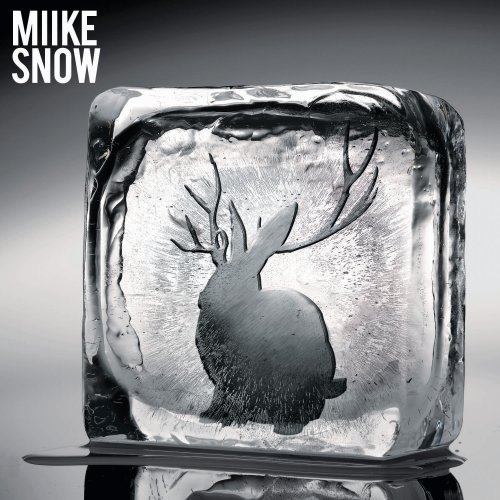
To keep things in perspective though, I almost avoided this album entirely. To be honest, when I first heard the lead single, "Animal," I wasn't too impressed. It seemed like a perfectly competent pop song, but something about it just didn't click with me until--seemingly at random--I couldn't get the bloody thing out of my head. Pondering this mystery, I consulted a colleague of mine, and he made me aware of the fact that "Animal" is best described as a latent virus of a song. Whereas MGMT songs lose their initial appeal because of shallow songwriting and ill-conceived synth work, "Animal" will grow on you and not stop until you are singing "I change shapes just to hide in this place / But I'm still, I'm still an animal / Nobody knows it but me / When I slip, when I slip I'm still an animal" all the live-long day.
Once this happened to me, I couldn't help but give the whole album a listen, and it's a good thing I did. First of all, it's a great debut for the Swedish trio, and secondly, I could have upset the cosmic balance had I not fulfilled that nonsensical prophecy. Every song on the album presents some different, well-executed pop arrangement that keeps the album interesting while also showing the Miike Snow's near-limitless potential.
That may sound like a bit of an exaggeration, and maybe it is, but here's just some things you may or may not realize you are encountering on this album: the stylistic combination of Sufjan Stevens and Animal Collective in "Burial," the whimpers of The Fray as they realize that "Sylvia" is miles above anything they could ever hope to do, and the re-imagining of summery, Jack Johnson and Jason Mraz ditties with "Song for No One." And those are just the next three songs following "Animal." The rest of the album does similarly awesome things.
Considering I was so skeptical at first, I was trying to unravel why what I would usually think of as a ridiculous outfit for a band would be so dang enjoyable, but then I had a revelation. Having an indie-pop group that contains experienced producers that have also been writing songs for Kylie Minogue, Madonna, and the aforementioned Britney Spears for years would actually be fantastic. It's a simple way to take proven creative talent and separate if from the mentality that some image or style needs to be maintained in order to create a 'best selling' package that is easily digestible for the lowest common denominator of music fans.
From here, I'd usually continue talking about each song on a track by track basis, but I don't want this review that obviously doesn't have anything bad to say about Miike Snow to get in your way of going out and buying it.
Review: The Dead Weather - Horehound
 When I heard that Jack White was rolling out a new album with a new posse, I got extremely excited, but then became very skeptical. You see, I am a big White Stripes fan, but was not too pleased with White's last project, The Raconteurs. However, after a bit of research, I started to come back around on the idea. With this new group, The Dead Weather, Jack White decided to keep just one Raconteur (Jack Lawrence, bass) and trade everyone else out for very interesting and personally exciting troupe consisting of vocalist Alison Mosshart (The Kills), guitar/keyboardist Dean Fertita (Queens of the Stone Age), and White (The White Stripes... duh) himself taking up the drums/vocals.
What has me excited about this combination of artists, you may ask? Well, for starters, almost none of them share much in common stylistically, and secondly, they're quite good at what they do for the most part. So this made me think to myself: what could possibly happen when you take minimalist post-punk, alt-metal, and blues revival, put it in a studio, and tell Jack White to make an album of it? Well, as The Dead Weather's debut seems to indicate, you get some eerie bayou-blues that rocks as hard as Rage Against the Machine at times, and plays out like the back-track to the craziest acid-western that hasn't been made yet at others. Essentially, White has come back in a big way with The Dead Weather's Horehound.
I only say White because, upon hearing even the first few seconds of the first track, "60 Feet Tall," it is clear who is in control of the band. Even though he has chosen to take the backseat position of drummer, White's influence is an ever-present force to be reckoned with. But, before you stop reading Mr. Jack-White-hater, understand that this man has come a long way since the days of Elephant and Get Behind Me Satan. There is a fullness of instrumentation and variety of song styles that keep the album novel and well-paced that hasn't really been fully realized by either The White Stripes or The Raconteurs here, and the results are sexy.
The most notable tracks on the album that provide this new sense of novelty are the reggae-tinged "I Cut Like a Buffalo," the quirky instrumental "3 Birds," and the ruefully inquisitive "Will There Be Enough Water?" Where "I Cut Like a Buffalo" takes the traditional, swagger-y instrumentation of White and mashes it up with reggae and bizarre choking noises, "3 Birds" sounds like someone made a bet that they could make an eerie western track that was composed of a discordant guitar riff and Korn keyboard samples and make it sound good. And--perhaps oddest of all--"Will There Be Enough Water?" features a somber set of self-conscious questions ("Just because you caught me / Does that make it a sin?") over its bluesy as hell configuration. Given all of the pomp that usually goes into Jack White's songs, this track ends the album on a curious but impactful note.
Of course, there are plenty of tracks that are more "rockin'" in nature, but they are just slightly less interesting to talk about. "60 Feet Tall," as hinted at earlier, sounds very much like it could be a track off of a White Stripes album (as does "No Hassle Night"), while the Rage Against the Machine simile lends itself most closely to "Treat Me Like Your Mother," "Bone House," and--to a certain but much smaller extent--"Hang You from the Heavens."
This leaves us with perhaps some of my favorite tracks on the album: "Rocking Horse," "New Pony," and "So Far from Your Weapon." Why are they my favorites, you ask? I think it may because they are lyrically interesting songs that have little but no-frills goth-blues instrumentation to get in the way of the writing. The speaker of "Rocking Horse" sounds like the story of a foul, wretch of a man who doesn't seek any sort of redemption or pity when White sings "Baby, don't you bother / tastin' the water / an' baby, don't you bother comin' closer to me / When you see my eyes / they're half the size / and I'm not able to look at you." "New Pony," on the other hand, is an interesting Dylan cover, and I don't think much needs to be argued about the quality of his songwriting, but it should be noted that this song is also where Mosshart's vocals seem to be at their best. But, I gotta say that "So Far from Your Weapon" wins out over these two, as the song seems to be a lecture from the baddestassest of badasses set to a sauntering guitar oscillation and a chanting chorus that only swells when it seems attention is not being paid. "You want to get up? / Let go?" asks the speaker before booming "I say no!" Props again to Mosshart, as she penned this beauty all on her own, and--with the exception of the Dylan, of course--is the only song written by a single member.
So, there you have it. I was expecting to be disappointed as I was with The Raconteurs, but Jack White has really assembled quite an impressive cast that works well together for The Dead Weather, and Horehound is the proof.
Review: Battlestar Galactica Season Four
So here it is, the big finale to my summer viewing of Battlestar Galactica. It's been a long, but mostly enjoyable road with the exception of some speed bumps occurring in season three so far. Unfortunately, a lot of problems persist into the series' final chapter along with a few new ones. But, I still can't hate on it too much, as it easily provides the most exciting and complex set of scenarios found in the show, and ends up tying up most of its loose ends up rather well, even if it isn't quite how I would have done it. It's one of those situations where I want to criticize it for not being as good as the rest of the series, but I must acknowledge that it is still much better than a vast majority of its contemporaries.
Season four kicks off well enough, avoiding the painfully slow start of the previous season, but quickly starts delving into all-too-familiar sci-fi territories. As the show hit the season 4.5 finale (due to the writers strike), themes reminiscent of works like Blade Runner, Planet of the Apes, and Heart of Darkness had started cropping up all over the place. I'm not about to say that borrowing from these works is necessarily a bad thing, but when the uses become so gratuitous and transparent, it makes for a more predictable and boring viewing experience.
However, it is only right around the finales when the show gets this caught up in tired messages. For the rest, there is still plenty of character intrigue, drama, and mystery for the most part, some of which gets wonderfully left up to interpretation (although I assume that some may have wanted absolutely everything explained). But (again, for me personally), I almost wish that the last episode never existed, or at least, was made a bit shorter by cutting out all of the heavy-handed hand-holding that explained what Battlestar Galactica was 'really about.'
My main objection comes at the final few minutes of the entire series, where Gaius Baltar and Caprica Six address one of the main themes of the show in some of the most forced and contrived dialogue I've ever encountered. So, in a way, my complaint is more about the way it was executed (poorly) more than the message itself, but I am not without issue there either. To put it simply, this little exchange sells the entire series short because there is easily more than one single conclusion to be drawn from the experiences of these people, yet the show seems to insist otherwise.
Even through all this bashing though, I can't say that I wouldn't recommend Battlestar Galactica. Upon the final montage, I still felt like I had experienced something truly special. If there is one way for me to wrap up the show, I would say that it is somewhat like the flagship itself: although it may develop some deep flaws over time, Battlestar Galactica hangs in there long enough to get you somewhere meaningful and worthwhile.
Review: The Winter Sounds - Church of the Haunted South

I would say that the easiest way for me to describe The Winter Sounds 'sound' would be a loose mixture of Band of Horses and Rogue Wave with a tinge of European flavor to it. Don't ask me exactly how I came to this realization, but ever since I came up with it, it seems to have proved itself true for the most part. Regardless, this 'sound' isn't necessarily what makes the album as interesting as it is. While the instrumentation has more than its fair share of moments (the horn section of "Graveyards," for example... heck, actually all of "Graveyards"), it is actually frontman Patrick Keenan's vocal talent that seems to stand out above all else, and this too, is a wonderful thing, as he has a relatively wide range that he often uses to his--and thus the album's--advantage. While this may not quite seem the case at the album's outset, once "O'Fear" starts, you'll know what I'm talking about.
Of course, the vocal work wouldn't mean much if there weren't some quality lyrics to go along with them. While there aren't too many moments where the writing grabbed me as particularly striking, The Winter Sounds seem to have a perfectly competent lyrical style, complete with stresses at most of the moments where they seem appropriate. The lyrics for "Pinebox" probably stuck out the most to me, but that might be partially due to the fact that the song juxtaposes some upbeat guitar riffage and horns to the pretty dark lyrics "Life took its toll on me so they put me in a box made of pine where I’ve lingered on / And if you come for me you’ll find Hemingway and I never die we just drink alone."
But for the more interesting songs like "Pinebox" and "Trophy Wife," there are also a few songs that just don't quite fit in with the majority of Church of the Haunted South. More specifically, "Marry Me" is quite a snoozer of a track that just sort of bumbles along about someone that wishes to marry an uncooperative lover. The problem here is that not only is the subject matter tired territory, but also because it isn't really approached in a novel way at all. Additionally, it is only towards the end of the song that the instrumentation picks up into something interesting, but at that point it's pretty much too little, too late. Fortunately though, "Marry Me" is the only real loser on the album in my book. Every other song on the album seems to pull out a few interesting tricks to make them stand-out. And, while the degree to which those tricks really click for The Winter Sounds varies, they all still seem to contribute something valuable to Church of the Haunted South in some way.
So essentially, with the exception of one song, the indie, new wave, synth pop sound of this little Georgian band works out really well on their latest release. Not too shabby, Winter Sounds. I may just have to try and see you live again when you come to the Red & Black on the 24th.
Review: Battlestar Galactica Season Three
Once again, I am here with an update on my sort of 'summer reading project' that consists of me making it through Battlestar Galactica and reporting my findings as I go. Up to this point it has been an absolute pleasure following the human fleet escape from the Cylons by the skin of their teeth time and time again, but I knew going into this season that things were going to be different. Both the creators of the show and I seemed to know that the original cat and mouse formula needed a new twist to maintain interest. And, while it's good that there were changes made to the Battlestar plotline to change things up, it's unfortunate (as the fact that Nickelback is playing in the background of this trailer may subliminally suggest) that these changes in Season Three make for some of the weakest parts of the show thus far.
First of all, the first handful of episodes seem to drag themselves way to far out for their own good. The story arc that starts the season, while somewhat intriguing as it is new, also seems like it could only end in one way, and it does. It's this combination of slow pacing and predictability that initially put me off on this season. I even thought that if they don't wrap it up soon enough, I may either try to skip ahead or quit watching altogether depending on how much catching up I had to do. Thankfully though, most of it is resolved in the first five episodes, and the later developments in the season (especially in comparison) really pick up steam towards the end providing a lot of momentum heading into the final season.
Other than those first few episodes--and a bizarre use of Jimi Hendrix's "All Along the Watchtower" towards the end of the season--Battlestar Galactica still shows that it has chops and is worthy of being considered among the greatest of television shows. Even at its low points, the show remains miles above most everything else.
Review: Oh.Bliv x Just Plain Ant - Black Soap
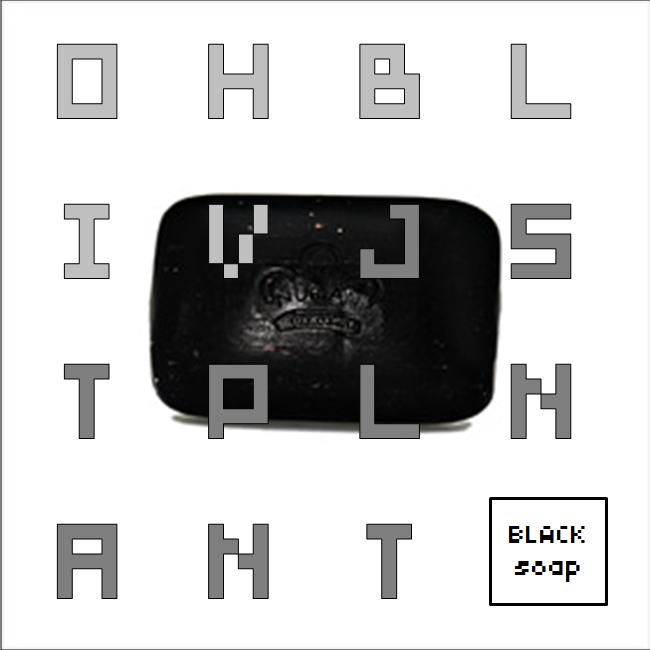
Here we are a few months later, and it seems that Gillison is delivering on his promise. With Braintrust's The Bailout, Jay Slim's The High Life, and--this little number--Oh. Bliv x Just Plain Ant's Black Soap all coming out since we talked in March, it seems safe to say that the young producer has proved his vision true. But, enough of this exposé on Just Plain Ant and his ventures, let's talk music, shall we?
Given the nature of Ant's previously released work and his collaboration with Brad Oblivion (Score One for the Little Guy, Earthtone), listening to Black Soap came as a bit of a shock. What I was expecting to be another Just Plain Sounds release complete with the vocal graces of Brad Oh turned out to be a completely lyricless album that compensates with thoughtful sample work and tight production.
One of the hard parts about listening to this album is it's beginning though. Kicking off Black Soap is a sparsely furnished bass loop entitled "Kugichagalia" followed by the jarringly paced "Off." These two track just seem to be at odds with each other as well as the whole album. While "Kugichagalia" is a smooth but relatively barren barren trip that ends much the same way it started, "Off" takes this idea of songmaking and flips it on its ear by starting with a swelling guitar loop that quickly fades out and is replaced by a different beat entirely. The whole thing doesn't sound necessarily bad, but it does give a dischordant and disorganized feeling to the beginning of an album that does not need a confusing first impression.
Thankfully, the album picks up steam and comes into its own with the next track, "They Belong to Me." The little comedy sketch sample at the beginning eventually gives way to a nice, jazzy number complete with a catchy keyboard hook to tie it all together. And the goodness does not stop there. From "They Belong to Me" through the rest of the album, Black Soap is full of no-nonsense, old school beatmaking that sounds remarkably fresh and tasteful.
Most notable tracks include the relaxing piano of the inexplicably named "How You Want It, Pt. 2" (there does not seem to be a first part), the eerie soundscape of "Scavengers," and the salsa lounge atmosphere of "Back to This." What all of these songs do above the rest is add another layer that extends beyond sampling and beat making. These songs have a pace such that they never keep you in one spot for too long, and the next place that they take you is at least as interesting as the last. This makes these songs feel like more meaningful journeys than the rest, but rest assured that this is not to say that the rest are by any means dull or unenjoyable.
It just seems that there is something missing from some of the other tracks; not a big something, just a little one. The reason for this may just stem from my expectation that there would be words to accompany these beats upon my initial listen, or perhaps it is because I am not entirely well-versed in this kind of music. Regardless, Black Soap left me with only this tinge of regret, which is to say, simply put, that this is one small complaint towards what is otherwise a fully competent and strong album.
So with that said, Just Plain Ant and Brad Oblivion's collaboration may not sound like the kind of music that will be rockin' the party anytime soon, but it does make for some enjoyable listening in it's own right. Be sure to pick it up here, or at least give it a listen using the embedded player. Go ahead, don't be scared. Clean your ears with some Black Soap.
Review: Battlestar Galactica Season Two
Don't let the questionable music choice for the above trailer fool you, part two of my quest to conquer Battlestar Galactica has been quite an enjoyable experience, even though this season is quite as tight and polished as the first.
Needless to say, season two of Battlestar picks up right where season one left off, continuing the human effort to escape the cylon threat. This time around though, there are more than a few isolated story-arcs, making parts of the season come off as more episodic than I would have liked. The show just seems to lend itself more towards following a main story rather than delivering seemingly random, slice of life pieces.
With that aside, every episode is still consistently strong. The only bad thing about season two is that it marks the beginning of a series of increasingly bizarre events that continue throughout the rest of the season, and these events can be rather off-putting, especially for casual viewers. This is not to say that the neurotic Dr. Baltar's constant conversations with a woman that lives inside his head isn't weird; but, let's just say--for the sake of avoiding spoilers--weirder stuff happens this season.
Other than that though, you can expect a similar feeling of 'hey, this is Battlestar Galactica, and it's pretty good' from pretty much every episode. The entire cast turns in a strong performance, especially Mary McDonnell, Edward James Olmos, and James Callis.
So, in summary, Battlestar is still a really strong show by the end of its second season. While it probably will not win you over if you did not like the show's first season, it is definitely a no-brainer that you should check it out if you did.
Review: Battlestar Galactica Season One
Going into this summer, I discovered that Sci Fi's critically acclaimed show, Battlestar Galactica, had recently aired its final episode. As one that can almost never follow an ongoing TV show on a regular basis, this discovery is what finally spurred me into checking it out. Since the summer began, I have been making it part of my regimen to watch at least one episode a week so that I can eventually make it through the series and have a better idea of what makes this show one of the Best 100 TV shows of All Time. Fortunately, Battlestar Galactica makes this an easy task, as it is such an excellent program that I have wasted more than a few beautiful summer days camped out in front of my television trying to cure myself of a bad case of 'ZOMG-what-happens-next' fever, and Season One of Battlestar is surely capable of giving all but the most elitist or anti-sci-fi fans this malady.
The show tells the same story we heard back when the first iteration of the show aired back in 1978 of the war between the humans and machines referred to as 'cylons.' Humanity lived comfortably on twelve colonies until a traitor known as Baltar allowed for cylons to attack the twelve colonies, forcing the remains of the human race to flee, boarding whatever ships they could in hopes of some day escaping the cylon forces and finding the fabled thirteenth colony known as 'Earth.'
From the very first episode, Battlestar Galactica immediately dumps you into the action, starting with the intense back-end of the escape from the initial cylon threat; crews haven't slept in days and the cylons seem within reach of eradicating the human race. It is this intensity that makes Battlestar Galactica a gripping program, and the show's reimaginers, David Eick and Ronald D. Moore, only ease the tension slightly to later ratchet it up even further throughout the show's first year, making for an incredibly tight, high-impact narrative that will leave you most assuredly wanting more.
With a strong cast composed of established actors like Edward James Olmos (Commander Adama) and Mary McDonnell (President Roslin) as well as relative newcomers Katee Sackhoff ("Starbuck"), Jamie Bamber (Lee Adama), James Callis (Dr. Gaius Baltar), and Tricia Helfer (Number Six), the show never feels like it has to lean too heavily upon one role or another. The great thing about this is that the show tends to weave together several plotlines that involve entirely different characters, and, without high quality acting, some narratives might come off as particularly weak, but this is not the case for Battlestar, and it is these strong side plots that help build a more believable and involved universe; a key ingredient in making a quality sci-fi show.
While the phrase 'weave together several plotlines' may seem like either a way to postpone some inevitable plot point or create confusion among viewers, Eick and Moore handle the intricacies of parallel drama deftly in Season One such that viewers are shown a wide variety of the happenings in the human fleet, but are always kept constantly aware of humanity's main goal of surviving the cylon attacks and trying to find Earth. This 'all killer, no filler' formula for a show that--by the way--has some of the best special effects I've seen on TV, makes Battlestar Galactica's first season an incredible first step in the right direction of compelling sci-fi drama.
Review: Phoenix - Wolfgang Amadeus Phoenix

Between the snippets of their performance on Saturday Night Live, some remixes by the likes of Andrew Maury from the Remix Artist Collective and Alex Metric, and a few facebook messages (thanks, Helen!), Phoenix quickly became a name that I could no longer ignore. And, I have to say, now that the firey bird has entered my realm of music knowledge and appreciation, I am much better for it. Wolfgang Amadeus Phoenix, although not necessarily groundbreaking, presents a such a wide range of pop hooks that showcase a flexibility that not many other artists seem to have. And, while some of the diversity seems like attempts to emulate other artists, Phoenix still does it well enough to come off as distinctly different and--in some cases--better than their inspirations.
The record kicks off with the 80s sounding lead single, "Listzomania," a song that will have you wondering why this band isn't bigger; that is, if you aren't too busy dancing or wondering why this song hasn't been included in the soundtrack to some generation-defining film already. Thomas Mars' contradictory, angsty, yet substantial lyrics make for a strong song alone, but the bouncing guitar riffs will keep you coming back for a good time.
Similarly, the second single off Wolfgang Amadeus Phoenix, "1901," delivers quite an impact too, only in the form of a more modern dance rock tune. "Fences" then subdues the vocals to a light whimper while highlighting some plunky guitar work remeniscent of early Minus the Bear. Vocals are then taken out completely for the most part of "Love Like a Sunset" (until part 2 strikes up) in exchange for loops of electronic beeps that are paired with traditional instruments, creating a Battles-type vibe; but, Phoenix is much less experimental, and generally more pop focused, with their instrumentation. "Lasso" returns Phoenix back to the more dance-y side of things by bringing a faster tempo and vocals back out in full force, but giving them a Tegan and Sara-esque twist in terms of cadence and intonation. "Rome" continues in this vocal style while also slowing down to a more melancholy pop sound. It actually isn't until the last three tracks of the album that Phoenix starts to shed obvious comparisons and start sounding more distinct.
This lack of distinction is by no means negative though. All of their borrowings and influences seem to flow naturally through the band's dynamic, and no single convention serves to keep the tunes afloat. Phoenix just seems to be toying with established styles and then making them their own, and let me tell you, they are pretty successful at doing this.
As the album title may seem to imply, Wolfgang Amadeus Phoenix is a collection of songs that are classically poppy. Full of emotive, contrary wisdoms, fun choruses, bouncy guitars, and (of course) danceable beats, Phoenix's latest makes for quite and enjoyable listen, even on the 100th playthrough.
Review: Peter Bjorn and John - Living Thing
The album's first track "The Feeling" seems to serve as the perfect introduction to PB&J's new style and song structure, not only because it is chronologically first or because it features vaguely reminiscent traits from Writer's Block, but also because the chanting chorus, quite literally, states "I can feel it / Can you feel it? / There's something in the air." What is, in fact, in the air is the new, yet oddly familiar, sound that Living Thing creates. The track also points out that more of the same stripped down sound is what's to come with the words "I'm feeling that all the things we are is enough." This seems to be the overlying mentality of Living Thing, and it shows on almost every track.
Next is "It Don't Move Me," which is Living Thing's most transparent throwback to the band's old ways, as it takes the formula of "Young Folks" and applies it unabashedly to a new set of lyrics and the removal of whistling and bongos in exchange for a dark sounding piano riff and funky electronic backbeats. While this sounds like a cop out of a song, these seemingly small transformations make for a much more brooding and dark song that retains all the hooks of a joyous pop anthem. From here on out however, the terrain gets much more unfamiliar.
Thankfully, Living Thing successfully avoids being an album full of rewrites of their strong suits, as songs like "Nothing to Worry About," "Lay it Down," and "Living Thing" prove that the trio has more than one dimension. "Nothing to Worry About," with its child sung chorus and simple lyrics, has most likely already reached your ears, and if not, will probably reach them soon. The catchy chant of "Do this thing / This type of thing / Put a little money in this type of thing / I got nothing to worry about" will most likely follow a similar path of a little-known ditty I heard last summer. I believe it was called "Paper Planes."
"Lay it Down" is similarly infectious, but uses garish vulgarity to hook the listener, opening with the chorus "Hey, shut the fuck up boy / You are starting to piss me off." This tactic seems a divisive one among listeners, coming off as either cheap and immature, or the most fun dance song you've heard all year. Regardless, it's catchy. Just don't expect it to be more than that.
"Living Thing" may not get as much radio play as "Nothing to Worry About" almost surely is, but it does introduce a nice, twangy vibe that shows a willingness to play with genres that sadly is not really anywhere else on the album. The rest of the songs seem to stick to their signature, indie-pop guns. Lucky for PB&J, these guns are pretty reliable, even if they aren't all extremely notable.
The album concludes with "Last Night," a floaty, ethereal bullet from one of those signature guns that seems to find its target better than any other on the album. The simple piano and synth melody supported by nothing more than a heartbeat and staggered lyrics marks the point at which Living Thing sounds the most alive. The track is a beautiful, yet injured sounding conclusion to a similarly constructed album.
Overall, Living Thing is a solid step in the right direction for Peter Bjorn and John. Admittedly, it is a baby step, as some songs cling rather tightly to the successes of Writer's Block. And yes, the instrumentation is way stripped down, which is not necessarily the wisest move considering calling Peter Bjorn and John's lyrics "a little repetitive" is a bit of an understatement. However, this unlikely pairing makes for a slow burn of quirky hooks that somehow fall together into an album that will have you swaying back and forth chanting all along the way.
Review: The Prodigy - Invaders Must Die
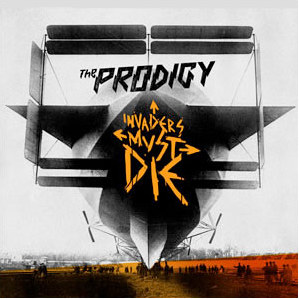
To me, The Prodigy have always been a group of relatively likeable hooligans that jump around confessing their crimes of arson and domestic violence while breathing. Beyond that experience though, how they became the best-selling dance outfit of all time is a mystery to me. It just seemed to me that these big beat Brits haven't put out many decent tunes beyond the ones on their third outing, The Fat of the Land.
That is, until I heard the title track for Invaders Must Die. Oddly enough, I discovered both the song and the music video for this track when I woke up one morning to find it sitting on my Xbox 360 after a night of heavy drinking. To the best of my recollection, I didn't put it there (but I must've), so I decided to give it a listen and suddenly got pretty excited about the idea of a new Prodigy album dropping. While the track doesn't really sound like The Prodigy proper, it made perhaps the best use of nu-rave, Hadouken!-esque keyboards that I have heard while also jumping on the electro-meets-rock bandwagon that relative newcomers Digitalism and Justice have been riding in recent years. In fact, had I heard "Invaders Must Die" on the radio, I probably would have had no idea it was them if it wasn't for the robotic voice that reminds you a couple times throughout the song that they are, in fact, The Prodigy. Needless to say, I grew very fond of the track, and really hoped that the rest of the album would be as good.
From here though, I was pretty neutral about the album until I listened to it a few more times. The rest of the tracks largely make use of the nu-rave keys, lots of drums and some nonsense lyrics emanating from the psychotic Keith Flint (and, occasionally, the slightly less crazy Maxim Reality) as per usual for The Prodigy. But, after a few more listens, all of these tracks seemed to become flat and, quite frankly, annoying. A couple tracks in particular ("Run With the Wolves" and "Stand Up") possess drum tracks played by Dave Grohl of Nirvana and Foo Fighters fame, meaning the beats in these songs should be something special, right? Turns out that no, Grohl was brought on to play drums on these tracks for no good reason.
It just seems that, for the most part, The Prodigy just put out all their good material on one disc back in 1997, and have been suffering ever since. Do yourself a favor and just buy The Fat of the Land again if you feel the urge to purchase Prodigy album. It's kind of odd to think that I kind of enjoyed listening to some tracks on Invaders Must Die like "Omen" and "Take Me to the Hospital," especially since the amount of irritation they cause to my ears now is almost indescribable.
